
Dell PowerEdge R730 vs R740: which refurbished server to buy
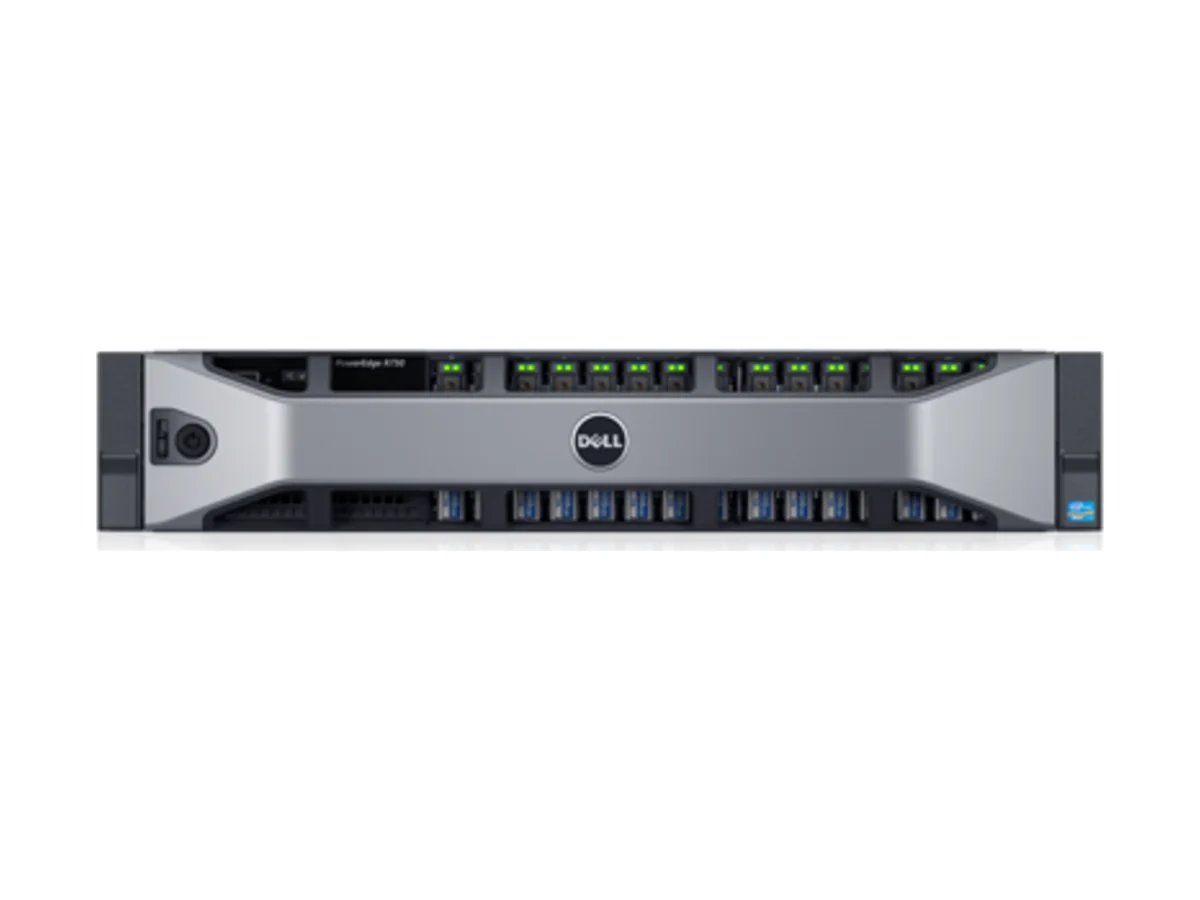 Dell PowerEdge R730
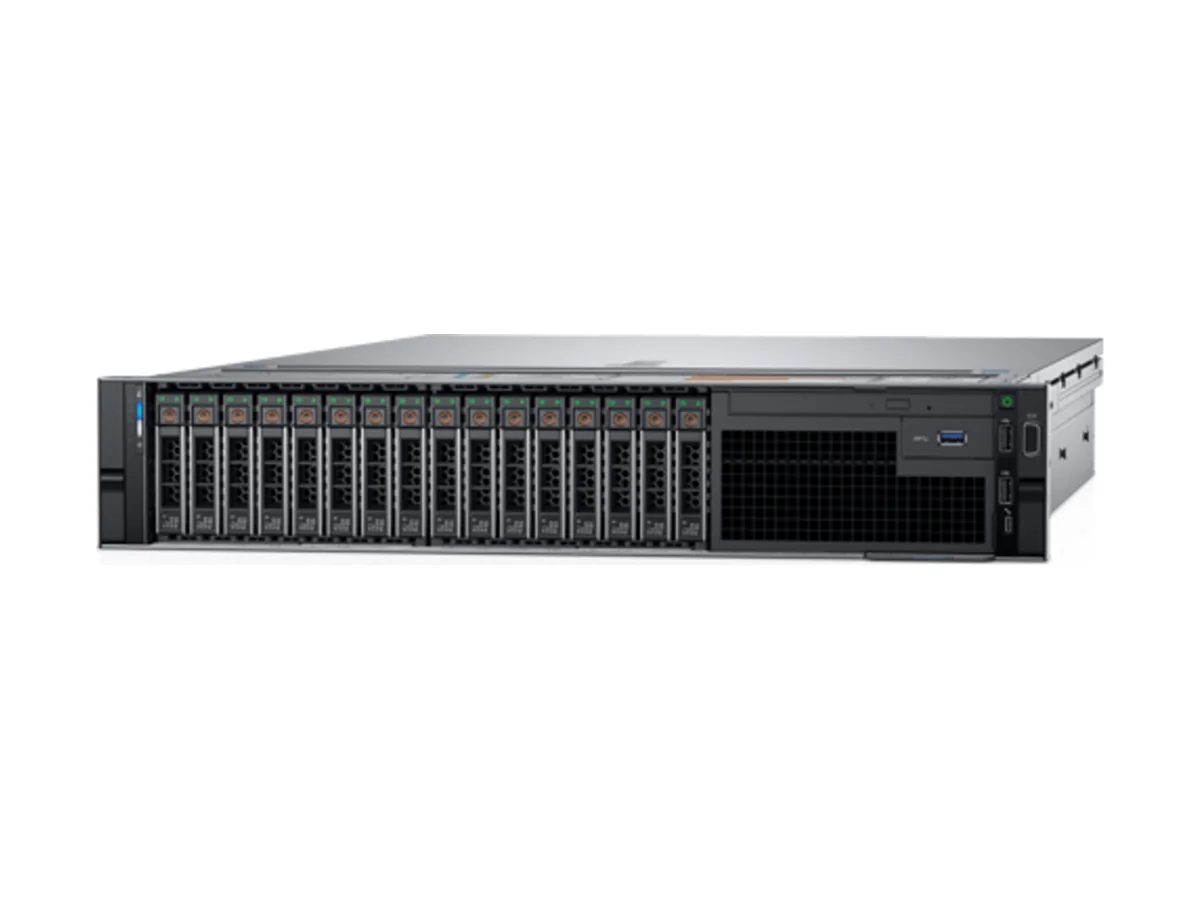 Dell PowerEdge R740
The Dell PowerEdge R730 and R740 are both two-socket, 2U rack servers. The R730 is a 13th-generation server built on Intel Xeon E5-2600 v3/v4 processors; the R740 is its 14th-generation successor, built on Intel Xeon Scalable processors. This guide compares the two on the points that matter when you buy refurbished: processors, memory, drive bays, RAID, remote management and price.
Quick answer
- Choose the R730 if you want the lowest-cost two-socket 2U server for file serving, Windows Server, Active Directory, small databases or a handful of virtual machines. It currently starts at RM 1,445.
- Choose the R740 if you need more cores per processor, faster or larger memory, 3.5" drive bays in our configurator, a BOSS M.2 boot card, an 8GB-cache RAID controller or iDRAC9. It currently starts at RM 4,517.
R730 vs R740 specifications
| Specification | Dell PowerEdge R730 | Dell PowerEdge R740 |
|---|---|---|
| Generation | 13th generation (Intel C610 chipset) | 14th generation (Intel C620 chipset) |
| Processors | Up to 2 x Intel Xeon E5-2600 v3/v4, up to 22 cores each | Up to 2 x 1st/2nd Gen Intel Xeon Scalable, up to 28 cores each |
| CPUs we offer | 18 CPU options, 8 to 22 cores | 57 CPU options, 4 to 28 cores |
| Memory | 24 DDR4 DIMM slots, up to 2400MT/s; max 768GB RDIMM / 1.5TB LRDIMM | 24 DDR4 DIMM slots, up to 2933MT/s; max 1.53TB RDIMM / 3TB LRDIMM |
| Memory we offer | 8GB to 64GB ECC DIMMs | 8GB to 128GB ECC DIMMs |
| Drive bays (Dell) | Up to 16 x 2.5" or 8 x 3.5" | Up to 16 x 2.5" or 8 x 3.5" |
| Chassis we offer |
|
|
| PCIe slots | Up to 7 x PCIe 3.0 + dedicated PERC slot | Up to 8 x PCIe 3.0 |
| GPUs | Up to two 300W or four 150W | Up to three 300W or six 150W |
| RAID / HBA we offer |
|
|
| Boot SSD | Internal dual SD module | BOSS card (2 x M.2 SSD, hardware RAID 1) or dual SD |
| iDRAC licence |
|
|
| From price (live) | RM 1,445 | RM 4,517 |
Rows marked ● are read live from our configurator, so options and From prices are always current. Other rows are from Dell's published specifications (sources below); the configurator lists the parts we can actually supply.
Processors: Xeon E5 v3/v4 vs Xeon Scalable
The R730 takes up to two Intel Xeon E5-2600 v3 or v4 processors on the Intel C610 chipset, with up to 22 cores per processor. The R740 moves to the Intel C620 chipset and takes up to two 1st or 2nd Generation Intel Xeon Scalable processors (Bronze, Silver, Gold and Platinum), with up to 28 cores per processor. That is up to 44 cores in a fully populated R730 and up to 56 cores in an R740.
In our configurator the R730 offers Xeon E5 v3 and v4 parts from 8 to 22 cores, while the R740 offers a much wider list, from the 4-core Xeon Silver 4112 to the 28-core Xeon Platinum 8280L. If your software is licensed per core, such as Windows Server or some database editions, you can pick the exact core count you need on either model.
Memory
Both servers have 24 DDR4 DIMM slots, 12 per processor. According to Dell's comparison matrix, the R730 runs memory at up to 2400MT/s and supports up to 768GB with RDIMMs or 1.5TB with LRDIMMs. The R740 runs memory at up to 2933MT/s and supports up to 1.53TB with RDIMMs or 3TB with LRDIMMs. The R740 also supports NVDIMM and Intel Optane DC persistent memory, which the R730 does not.
For most small and mid-sized workloads, both platforms have far more memory headroom than you will use. The difference matters for large virtualisation hosts and in-memory databases, where the R740's larger DIMMs let you reach higher capacities with fewer slots.
Storage and RAID
Dell builds both servers with up to 16 x 2.5" or 8 x 3.5" front bays. In our configurator the R730 is offered in 8 x 2.5" and 16 x 2.5" chassis, while the R740 is also available with 8 x 3.5" bays for high-capacity hard drives, as well as a diskless option. The backplane is chosen when the server is built, so decide on 2.5" or 3.5" drives before you order.
For RAID, the R730 uses the PERC 9 family: the H330, the H730 with 1GB cache and the H730P with 2GB cache, plus the HBA330 for pass-through. The R740 supports the same H330 and H730P and adds the PERC H740P with 8GB cache. The R740 can also take a BOSS card with two M.2 SSDs in hardware RAID 1, so the operating system or hypervisor boots from its own mirrored drives and every front bay stays free for data.
Management: iDRAC8 vs iDRAC9
Both servers include Dell's integrated remote access controller with Lifecycle Controller. The R730 has iDRAC8 and the R740 has iDRAC9, which adds Quick Sync 2 with a BLE/wireless module for at-the-server management from a phone. Both support the Redfish RESTful API. In our builds the iDRAC Express licence is included on both models, and an Enterprise licence is available as an upgrade for more advanced remote-management features.
Expansion, networking and power
The R730 has up to 7 PCIe 3.0 slots plus a dedicated PERC slot, and the R740 has up to 8 PCIe 3.0 slots. Dell rates the R730 for up to two 300W or four 150W GPUs and the R740 for up to three 300W or six 150W GPUs. Both use a network daughter card for built-in networking (4 x 1GbE, 2 x 10GbE + 2 x 1GbE or 4 x 10GbE), and the R740 adds a 2 x 25GbE option. Dell lists power supplies from 495W to 1100W for the R730 and from 495W to 2400W for the R740.
Price
The Dell PowerEdge R730 currently starts at RM 1,445 and the Dell PowerEdge R740 at RM 4,517, a difference of RM 3,072 for the base build. Those are the cheapest complete builds; the final price depends on the processors, memory, drives and RAID controller you choose, and the configurator shows the total in RM as you go.
Which one should you buy?
Buy the R730 when budget comes first and the workload is well understood: a file and print server, domain controller, accounting or ERP database, or a small Hyper-V, VMware or Proxmox host. Its Xeon E5 v4 processors and DDR4 memory are a proven, affordable platform.
Buy the R740 when you want more performance and longer headroom: more cores per socket, faster and larger memory, 3.5" bays, the H740P controller, a mirrored BOSS boot device or iDRAC9. If you need 12 x 3.5" or 24 x 2.5" bays, look at the Dell PowerEdge R740xd or the Dell PowerEdge R730xd instead, and see our R730 vs R730xd guide. For the full Dell range, browse all Dell PowerEdge servers.
Configure the R730 Configure the R740
Buying from ServerStore Malaysia
Every server in this guide is refurbished and in stock, and is configured to your order and tested before it ships. Each one comes with a 1 Year Return To Base Warranty and has a 7-14 working day lead time after payment confirmation. We deliver across Malaysia by GDEX, or you can collect free from our office in Cheras, Selangor. Not sure which build fits? Ask our engineers about your workload, or price your own build in our server configurator Malaysia.
Sources
- Dell EMC PowerEdge R740 and R730 server comparison matrix
- Dell PowerEdge R730 spec sheet
- ServerStore Malaysia configurator data for each model (options and From prices, read live)